
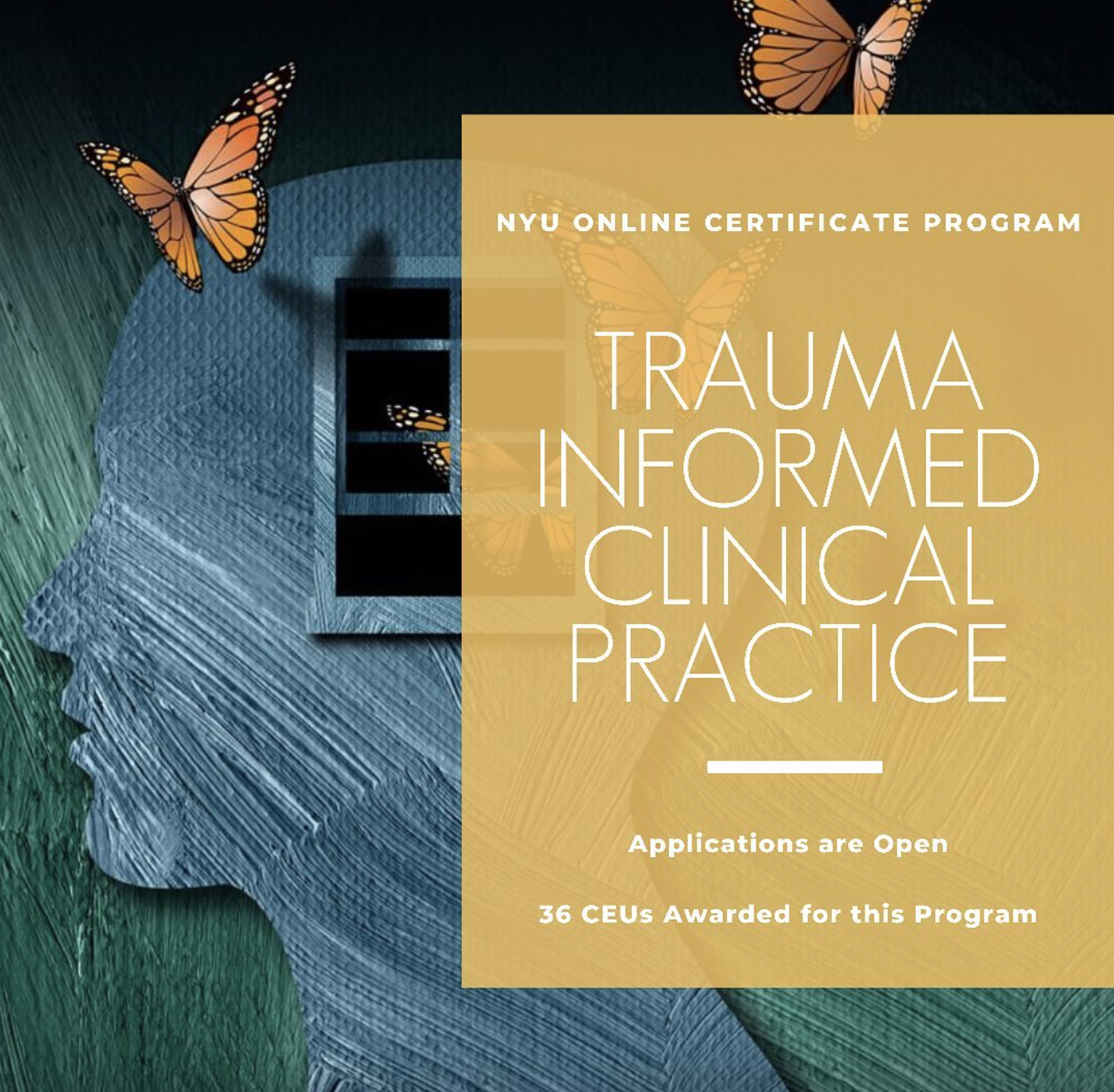
Trauma Informed Training for Mental Health Professionals
This 36-hour certificate in Trauma-Informed Clinical Practice is an online asynchronous course of study. The program offers accessible, critical trauma training for mental health professionals that is both comprehensive and intersectional in its scope.

Rethinking Your Relationship With Substances? Therapy Can Meet You Where You Are
One of the biggest myths about substance use is that you have to be in crisis before therapy makes sense. In reality, the best time to explore your relationship with substances is whenever you start wondering about it. Many people use alcohol or other substances to cope with stress, anxiety, loneliness, grief, or the pressure of simply getting through the week. That doesn't make you weak or broken — it makes you human, doing your best with the tools you've had.

Cultivating Mindfulness: Finding Stillness in a Busy Life
Mindfulness is the practice of paying attention to the present moment with openness and without judgment. That's it. It's not about emptying your mind, achieving perfect calm, or sitting cross-legged for an hour. It's about noticing your breath, your body, your thoughts and gently returning your attention when it wanders. And it will wander. That's not failure; that's the practice.

Academic Anxiety: When School Stress Becomes Something More
Academic pressure doesn't land on everyone equally. If you're a first-generation student, you may carry the weight of your family's hopes alongside your own. If you're a student of color or LGBTQ+ student navigating spaces where you're underrepresented, the pressure to prove yourself can be relentless. Imposter syndrome, that nagging voice saying you don't belong, thrives in these conditions, no matter how much you've earned your place.

10 Ways to Improve Your Mental Health Starting Today
Caring for your mental health doesn't require a total life overhaul. Small, consistent choices, especially ones that honor who you are, can make a real difference in how you feel day to day. Here are ten places to start.

When Food and Body Image Feel Complicated: You're Not Alone
We live in a culture saturated with messages about what bodies "should" look like. For LGBTQ+ folks and people of color, those messages can be even louder and more layered. Beauty standards are often rooted in whiteness, thinness, and rigid gender norms — leaving many of us feeling like we were never meant to fit in the first place.
Before Your First Session: Everything You Need to Know About Using Insurance
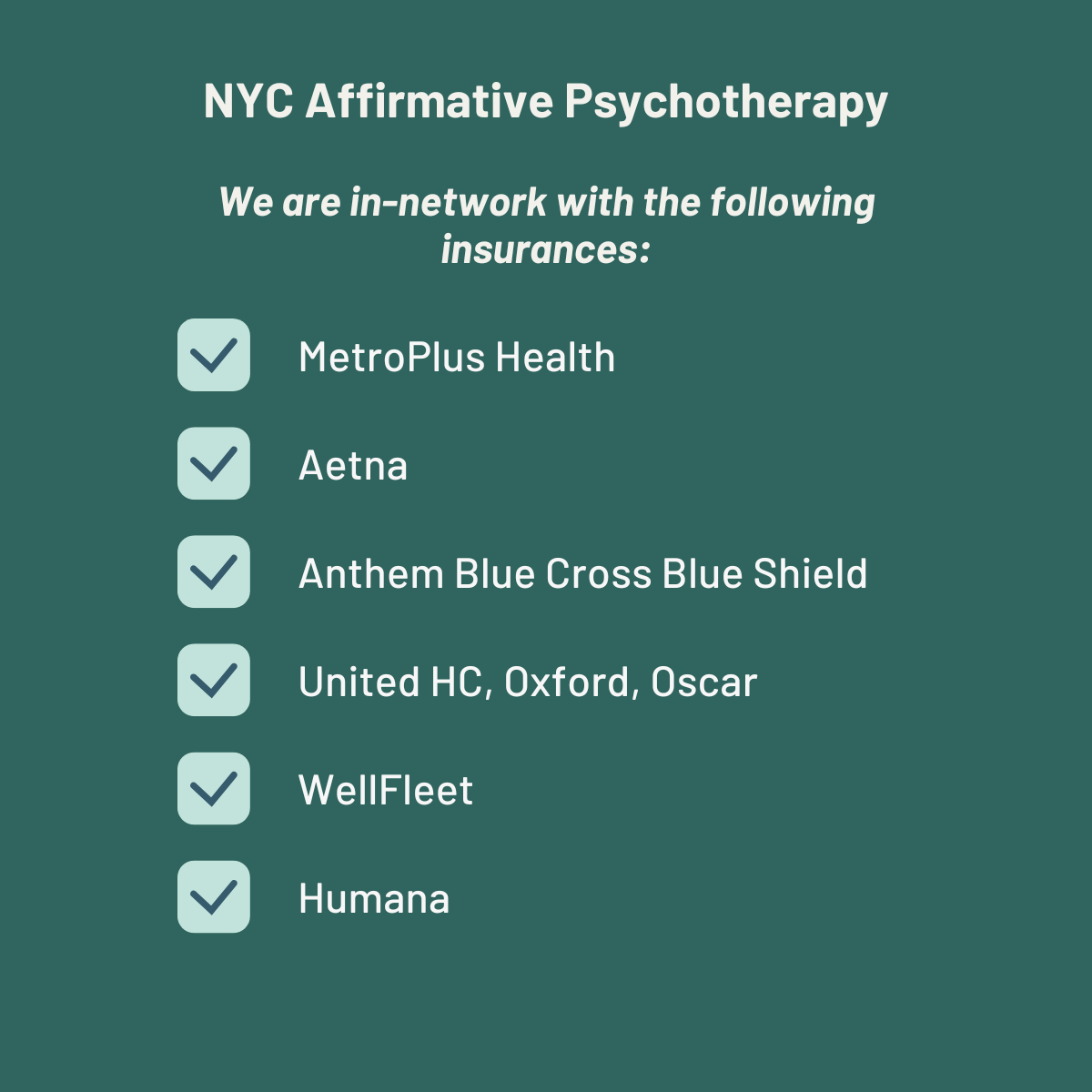
How to use your insurance to cover mental health therapy at NYC Affirmative Psychotherapy. We’re in network with Aetna, Anthem, Humana, MetroPlus Health, Optum, Oxford, United HealthCare, and Wellfleet.

Understanding Shame and How Therapy Can Help
Shame is one of the most painful and pervasive emotions a person can carry. Unlike guilt, which says "I made a mistake," shame whispers something far more damaging: I am the mistake. It lives in the body, hides in silence, and quietly shapes how we see ourselves, how we move through the world, and who we believe we deserve to become.

Seeing the Whole You: Kimberlé Crenshaw's Intersectionality and What It Means for Your Mental Health
Have you ever felt like the world only sees one part of you at a time — your race, or your gender, or your sexuality — but never the full, complex, layered person you actually are? If so, you're not alone. And there's a framework that puts a name to exactly that experience: intersectionality.
Know Your Rights
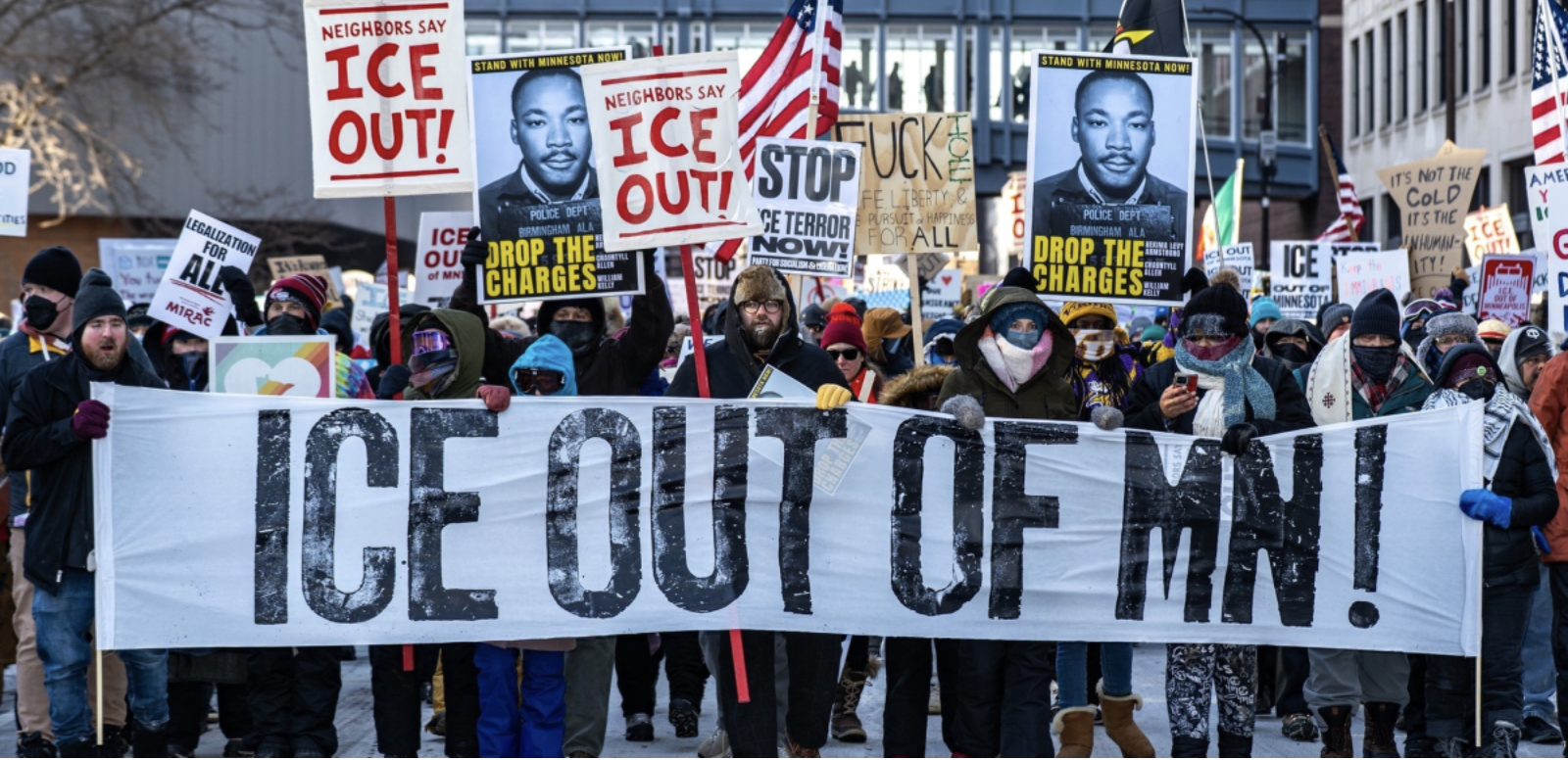
We here at NYC Affirmative Psychotherapy continue to stand with people, institutions, and systems that uphold the dignity, safety, and basic human rights of all folks in this country. Here are some resources to help support immigrants and those undocumented.

You're Not Faking It: Understanding and Overcoming Imposter Syndrome
Imposter syndrome is the persistent feeling that you're not as competent as others perceive you to be, despite evidence of your success and abilities. It's that nagging voice that whispers you're a fraud, that you've somehow fooled everyone around you, and that it's only a matter of time before you're exposed.

Immigrant Rights and Resources
At NYC Affirmative Psychotherapy, we recognize the innate strengths that continue to allow people to function while enduring difficult life circumstances. We understand that xenophobia and other forms of oppression impact our mental health. Although not everyone can benefit from our services, we proudly support organizations doing important work with and on behalf of community members affected by structural violence. Please consider supporting the organizations below that help individuals, families, and unaccompanied children access vital services while navigating the immigration system.

In-network Health Insurance at NYC Affirmative Psychotherapy
Health insurance can be quite complicated, so we’re here to help you sort it out. At NYCAP, we’re in-network with many insurance plans, including Medicaid.
Our mission.
Our goal has always been to fill a gap in mental health services provided to those that are historically marginalized and disenfranchised; we are especially committed to serving queer communities of color. We also strive to be culturally aware and trauma-informed.

Breaking the Overthinking Cycle: Understanding the Anxiety Connection
Overthinking involves repetitive, unproductive thought patterns that focus on problems, past events, or future scenarios without leading to solutions. It's characterized by "what if" scenarios, replaying conversations, analyzing every detail of situations, and getting stuck in mental loops that increase distress rather than providing clarity.
This pattern often develops as an attempt to gain control or prevent future problems, but it typically creates more anxiety instead of the relief we're seeking.

Navigating Grief: An Affirmative Approach to Loss and Healing
Grief is one of the most profound human experiences, yet it's often misunderstood and rushed by a society uncomfortable with emotional depth. At NYC Affirmative Psychotherapy, we believe that grief deserves the same affirmative, non-judgmental approach that we bring to all aspects of mental health. Your grief is valid, your timeline is your own, and you are not broken for experiencing loss deeply.

Building a Compassion Practice for Mental Health: A Guide to Affirmative Self-Care
Mental health struggles can feel isolating, especially when the world around us seems to emphasize productivity over healing and perfection over authenticity. But what if there was a different way to approach your mental wellness—one rooted in compassion, affirmation, and the recognition that you are inherently worthy of care? Drawing from principles of affirmative therapy, we'll explore how to build a sustainable compassion practice that honors your full humanity.

Psychodynamic Psychotherapy: Can We Look at the Hurt Together?
Psychodynamic or psychoanalytic psychotherapy refers to a range of treatments based on psychoanalytic concepts and methods that involve less frequent meetings and may be considerably briefer than psychoanalysis proper. Session frequency is typically once or twice per week, and the treatment may be either time-limited or open-ended. The essence of psychodynamic therapy is exploring those aspects of self that are not fully known, especially as they are manifested and potentially influenced in the therapy relationship.

Finding Your Way: How Therapy Can Support Your Journey with Chronic Illness
When you're managing a chronic condition, you're dealing with multiple layers of challenge simultaneously. There's the physical reality of symptoms, medication side effects, and medical appointments. But there's also the emotional toll: grief for the life you had before, anxiety about the future, frustration with limitations, and the exhaustion that comes from constantly advocating for yourself in healthcare settings.

Healing Justice and Mental Health: NYC Resources for Queer BIPOC Communities
This article explores healing justice, its significance, and resources like the Kindred Southern Healing Justice Collective and the Healing Justice podcast, which offer invaluable support to queer BIPOC communities along with NYC Affirmative Psychotherapy.